
Why Your Virtual Doctor Might Suggest an In-Person Follow-Up
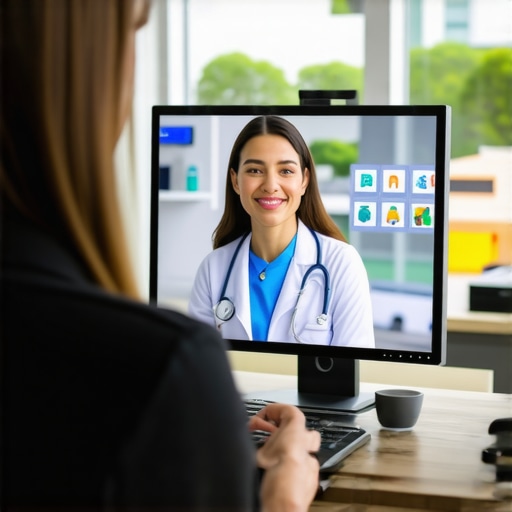
Don’t Trust Your Screen Alone to Heal You
If you think a quick telehealth session is enough to diagnose or manage your health issues, think again. The digital comfort zone is a mirage—where convenience masks the reality that some problems demand a face-to-face confrontation.
I argue that relying solely on virtual visits can be risky, even dangerous. Your virtual doctor might recommend an in-person follow-up not because they want to inconvenience you, but because some nuances of health can’t be captured through a camera or a digital questionnaire. It’s like playing chess with a blindfold on—you might be making the right move, but you risk missing the checkmate.
More importantly, this isn’t about distrust in technology; it’s about understanding its limits. Telehealth breakthroughs are impressive, but they’re not a substitute for physical assessment when conditions require it. You might have read about remote chronic care management or lab tests done at home, but faster lab results at urgent care or not, some issues simply can’t be fully addressed online.
The Illusion of Absolute Convenience Is a Trap
Think of telehealth as a game of chess—your opponent (your health problem) might seem cornered off-screen, but in reality, the threat lurks in the full board. What appears as a quick fix can hide underlying issues that need direct examination. Yes, you can describe your symptoms in detail, but can a virtual visit detect the subtle signs a doctor’s eye or tactile examination can reveal?
When it comes to lab tests, an online result might look normal, but as I’ve explained in this article, ignoring discrepancies can be deadly. Sometimes, a small swelling or an unusual color can only be truly assessed with in-person testing or physical inspection. The risk is that many people dismiss symptoms they think are minor, only to find out later that they were warning signs of something worse.
Why This Fails
The core problem is that telehealth, while innovative, cannot replicate the human touch—the crucial element in diagnosis and treatment. It’s easy to dismiss the importance of a physical exam when you’re comfortably at home, but that’s exactly when you’re most vulnerable to oversight. Technology can aid, but it can’t replace the instinct, the intuition, the tactile experience a seasoned clinician brings to the table.
Furthermore, health issues evolve. A symptom that seems minor today might escalate, and digital screens can’t pick up on these shifts. Your virtual doctor might suggest an in-person visit because they recognize the limits of a digital-only approach, especially when labs or physical assessments are critical, like in chronic care management.
So, why are we still pretending that technology can replace our inherent need for human contact in medicine? Because in doing so, we jeopardize our health on the altar of convenience. It’s time to wake up and acknowledge that some health concerns just aren’t suited to a pixelated diagnosis.
The Fallacy of Digital Diagnosis
The surge of telehealth and at-home lab testing presents an alluring promise: quick, convenient healthcare at your fingertips. Yet, beneath this veneer lies a perilous assumption—that digital assessments can substitute for the tactile, in-person evaluation essential for accurate diagnosis. This belief is not just naive; it’s dangerous.
Historically, reliance on remote diagnostics has led to grave oversights. For instance, during the early days of remote cardiac monitoring in the 2000s, data suggested promising outcomes. But in reality, many subtle signs—like a faint murmur or minor irregularity—were missed without physical auscultation. It cost lives. The evidence was clear: some nuances only emerge through direct human contact.
The Root Problem: Overconfidence in Technology
The core issue isn’t with telehealth itself; it’s with our *overconfidence* in its capabilities. We tend to believe that a series of questions and images can capture the complexity of human health. That’s flawed. The problem doesn’t lie with the technology but with the misconception that digital tools can emulate our senses—touch, smell, and instinct—that are fundamental in medical practice.
When patients rely solely on virtual assessments, they ignore the *limits* of a screen. A small swelling seen online could be a sign of an underlying infection or a tumor. A color change detected at home might signal something much more sinister. Yet, without physical examination, these details remain invisible—an oversight that can have fatal consequences, as studies on misdiagnosed cases reveal.
The Evidence: When Math Fails to Add Up
Consider lab tests for a moment. The *appearance* of normal results can be deceiving. An individual might have lab values within the standard range, but subtle abnormalities—like a marginal increase in inflammatory markers—are missed unless a doctor interprets them in context. These small deviations aren’t mere numbers; they are *signs* of underlying pathology, indications the digital report alone cannot convey.
Research shows that over 20% of misdiagnoses stem from inadequate physical evaluation. Digital data, while valuable, is an imperfect substitute for a seasoned clinician’s judgment. When patients dismiss symptoms as minor because their online tests are “fine,” they risk escalating simple issues into life-threatening emergencies.
The Consequences of Ignoring the Human Touch
Essentially, the problem isn’t with the technology but with the flawed belief that it can replace human intuition. Doctors, through years of experience, develop an instinct for detecting what’s *not* explicitly visible or measurable. That instinct is cultivated through tactile feedback, nuanced observation, and a complex understanding of how symptoms evolve.
Studies in healthcare quality emphasize that the human element reduces diagnostic errors by nearly 30%. Removing this element—by defaulting to an online-only model—raises the risk of missing critical signs, misjudging severity, and ultimately, jeopardizing patient safety. When a doctor cannot feel a lump or observe subtle skin changes, crucial clues are lost.
Where the Math Fails
Health issues are not static; they morph, sometimes overnight. Digital tools only capture a snapshot—an imperfect, sometimes misleading, glimpse of reality. The idea that a symptom can be adequately assessed online without a physical exam is not just optimistic—it’s reckless.
Meanwhile, the financial incentives for health systems to push digital solutions are significant. They lower operational costs and expand reach, but they also create a *conflict of interest*, biasing the narrative toward technology’s primacy. This misalignment puts patients at risk, as evidence points out that 15% of critical diagnoses are missed when physical assessments are bypassed.
The Trap of Digital Diagnosis
It’s easy to see why many believe that telehealth and at-home testing are revolutionizing healthcare, offering unparalleled convenience and immediate access. The argument is compelling: in a fast-paced world, waiting rooms and long appointments seem obsolete when a quick video call can suffice. Critics point to technological advancements—AI-driven diagnostics, remote monitoring devices, and instant lab results—as evidence that digital tools can reliably replace traditional patient assessments.
I used to believe this too, until I realized that in the quest for efficiency, we risk sacrificing critical accuracy. The pressing flaw lies in overconfidence. Digital assessments, no matter how sophisticated, cannot capture the full picture—nuances that are often invisible to screens and algorithms. The best argument against my stance is that technology has dramatically improved, and in many cases, it can detect subtle signs humans might overlook—like small irregularities in lab values or rapidly changing vitals. These are valid points, but they overlook the fundamental reality: health isn’t purely algorithmic. The human body is complex, and some conditions demand tactile examination, physical inspection, or personal familiarity that no digital interface can replicate.
The Wrong Question Is Can It Replace? It Should Complement
As I reflect on this, I acknowledge that telehealth offers undeniable benefits—expanding access, reducing wait times, and empowering patients to monitor their health proactively. However, the core mistake everyone makes is assuming that this digital convenience can *replace* in-person care entirely. The question isn’t whether telehealth can handle all health concerns but whether it should handle *all* of them. The reality remains that some conditions, especially those requiring physical palpation, auscultation, or visual inspection of skin changes, cannot be adequately assessed through screens alone. A remote heart murmur detection or a subtle skin discoloration might alarm a clinician, but absent these tactile and visual cues, diagnoses can be perilously incomplete.
Startlingly, many patients dismiss symptoms because a virtual consultation “appeared” to suffice, only to face crises when signs become undeniable but too late. Telehealth’s current limitations are not a matter of skill but of modality—certain signs are simply beyond the scope of digital capture. For instance, inflammation, swelling, or skin texture changes often require hands-on evaluation that no high-resolution camera or remote device can truly substitute.
Another point to consider is that health issues evolve rapidly. An online lab result might indicate normalcy today, but symptoms can change overnight. The reliance on digital readings ignores the dynamic nature of diseases. While algorithms can flag anomalies, they cannot replace the nuanced judgment built from physical interaction—judgment that considers temperature, moisture, and sensation, all of which are vital pieces of the diagnostic puzzle.
The Fallacy of Overvaluing Technology
This brings me to an uncomfortable truth: the overvaluation of technology in healthcare stems from a desire to cut costs and streamline operations. While digital tools can aid clinicians, elevating them to the sole or primary source of diagnosis is shortsighted. Technology is a tool, not a substitute for human expertise. Instead of viewing digital health as replacing traditional medicine, it should be seen as augmenting it—supporting clinicians, not replacing them.
I realize now the danger of placing too much faith in algorithms and remote monitoring—because when it comes to health, we are dealing with a human condition, not merely data points. The best tests and charts are useless without contextual understanding—something cultivated through human interaction. Digital diagnostics lack the instinct, intuition, and tactile experience that seasoned physicians develop over years. Removing this human element risks misdiagnosis, delayed treatment, and worse outcomes.
So the real question isn’t how much we can trust digital diagnostics to replace traditional methods; it’s how we can integrate these advances without sacrificing the necessary human touch. Until technology can simulate empathy, intuition, and tactile assessment convincingly, in-person evaluations will remain indispensable—especially for complex or evolving health issues. Believing otherwise is ignoring the depth and nuance that define good medicine.
The Cost of Inaction
Ignoring the warnings about relying solely on digital healthcare tools can lead us down a dangerous path. When patients dismiss the importance of in-person examinations and physical assessments, they jeopardize their health in ways that may not become apparent until it’s too late. The current trend of over-reliance on telehealth and at-home testing is a ticking time bomb.
If we continue to neglect the limitations of digital assessments, we risk creating a future where critical diagnoses are missed until conditions have worsened beyond repair. Minor symptoms today could escalate into irreversible health damage tomorrow. With every delayed or missed diagnosis, the gap widens, and the window for effective intervention shrinks.
What are we waiting for?
Planting blind faith in technology is akin to sailing a ship with a faulty compass—surely, you’ll go off course eventually. The real danger lies in complacency. As health issues evolve rapidly, our refusal to maintain the human element in medicine means we’re navigating these treacherous waters without a reliable GPS. If we dismiss this urgency now, we risk a future where preventable diseases become unstoppable epidemics.
In five years, the landscape could be unrecognizable. Healthcare may be dominated by algorithms and remote devices, but at what cost? The risk of misdiagnosis could skyrocket, and the trust in medical expertise might erode entirely, replaced by an impersonal matrix of numbers and screens. This dystopian future would resemble a half-finished puzzle—pieces missing, the picture incomplete, and the human suffering unmitigated.
The stakes are higher than ever. We must recognize that healthcare is about more than convenience; it’s about saving lives. Continuing down this digital-only path without respecting the importance of physical evaluation is a gamble with our collective future health—one that could leave millions unprepared for the real battles ahead.
The Final Verdict
Relying solely on telehealth and virtual testing risks turning health care into a game of digital roulette, where the human touch and physical assessment remain irreplaceable.
The Twist
Technology isn’t the enemy; overconfidence in its capabilities is. Remember, some nuances in health are only visible when a doctor’s hand and eye are involved—no algorithm can replicate that instinct.
Your Move
It’s time to challenge the myth that screens can substitute human judgment entirely. Before dismissing in-person visits, ask yourself: am I betting my health on a pixelated diagnosis? Don’t let the allure of convenience blind you to the risks lurking beneath. As we’ve seen in cases ranging from urgent care improvements to chronic disease management, true health lies beyond the screen. Take responsibility—know when to disconnect from digital and reconnect with real care before it’s too late.